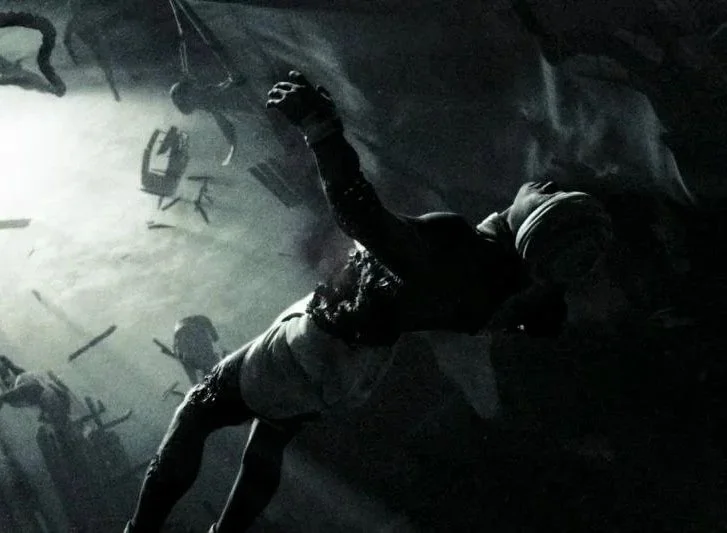
The quantum state of mind
What we call the Quantum State of Mind is not a theory — it’s a recognition, an intuition, an assumption, a felt insight that has always been with us, glimpsed in mysticism, confirmed in psychedelic states, and now echoed in the outer reaches of quantum physics and neuroscience.
It begins with a simple shift: The mind is not in the brain. The mind is in the field. Imagine.
A field that surrounds us, connects us, remembers us — a modern echo of what Einstein once called the ether, and what Teilhard de Chardin envisioned as the noosphere: a layer of planetary consciousness, emerging from the interplay of all human minds. The Jungian concept of an oceanic unconsciousness, perhaps, or, perhaps, not.
Teilhard believed that evolution was not just biological — it was spiritual and that we are not human beings having a spiritual experience; we are spiritual beings having a human experience. Like Teihard we believe (although we don’t know for sure) that the universe is moving toward integration, not disintegration. Toward what he called the Omega Point — a state of total coherence, love, and awareness.
In this spirit, the Quantum State of Mind is not a clinical condition. It’s a resonant mode of being – a tuning. That’s why we borrow the image of the tuning fork: Two prongs. Two possibilities. Two sides of the same coin held mid air in superposition, until something – an encounter, a trauma, a moment of grace, a turn of events makes the system collapse into a singular meaning. But meanwhile we dream and we are awake we are dead and we are alive. We are the story as it is being told, suspended in the very principle of uncertainty. We know this and we know this not. Of course. Superposition is that state of uncertainty. The ghost dream that is the subject of our investigations.
In this new type of psychology, the psyche is not reduced to chemistry or trauma charts. It is understood as a pattern in the field — a wave of resonance between the part and the whole. Healing, then, is not about medication. It is not even about causality. It’s about coherence. Vibration, Regulation, alignment. Psychedelic experience when approached with care and intention — can offer a glimpse into this structure. Love and Play can do the same. We love to play. We love to love. And above all, we love playing with our lovely minds.
We embrace the fact that the mind is not private. Not at all. That thoughts are not produced, but received. That telepathy as a fact and so are ghosts. We believe in De Ja Vues as doors to the hyperspace, the universal information background. We would like to think that love is not an emotion, but a medium — the actual connective tissue of the cosmos. But - again - we can’t be quite sure, although the bible kind of says so.
The institute offers life advice for the post-factual age, not to isolate or dis-cern, but to entangle, to spookily act at a distance. Not to know who we are but to see the ones, who we are with: Vibrating events in an intelligent field, held together by love. „Now we know in part but then we will know fully, as we have been fully known. (Cor.1.13.12. the way of love.)“
Preface to the Foundational Thesis
Ginthoer, Wellmann, Dirnhofer
Vienna / Elsewhere, Spring 2025
We submit this document not as a claim, but as a working hypothesis. The Quantum State of Mind is not a therapeutic brand, nor is the Institute that bears its name a treatment facility. What follows is not a method, not a cure. It is a study — or rather, the residue of a long inquiry into the limits of psychological language when confronted with the lived experience of collapse.
Our findings are personal. They are also theoretical. And at their best, they may be useful.
This work began where most official narratives tend to end: in the aftermath of rupture — psychiatric, relational, ontological. It emerged in settings that do not usually appear in academic acknowledgments: clinics, ceremonies, solitary walks, intensive care units, hospital basements, the occasional hotel room with questionable wallpaper. The work is grounded in formal training — philosophy, psychology, quantum mountaineering – but it is haunted by what those disciplines refuse to account for: paradox, poetry, pattern.
The mind – if that term is still of any use – does not operate in isolation. Our position is simple: any psychology that treats the individual as a closed system is inadequate. Whether that inadequacy is scientific, moral, or linguistic, we leave to the reader.
We propose instead a field-based approach to the psyche, informed by quantum theory’s implications for observation, identity, and causality. At the center of this approach stands the principle that meaning arises only in context — what Wittgenstein recognized in language, we extend to eveything that is. A symptom, like a word, is unintelligible without the field in which it appears. And the field, crucially, is entangled with all inside. it is the part and the whole. The drop and the ocean.
This insight is neither new nor exotic. It recurs throughout Taoist philosophy, in Indigenous healing practices, and – perhaps most interestingly – in the physics of the early 20th century, where observation itself began to fracture under the pressure of subatomic phenomena. If these traditions have something in common, it is not mysticism. It is humility: the refusal to separate what appears from the context in which it becomes visible. To separate the part from the whole. To collapse the wave function.
We also recognize that language fails at the edge of experience. What does one say of the moment when the self ceases to be central? What framework remains when interiority dissolves into field dynamics? Here, poetry becomes not ornament but function — the last form of speech before the silence of determination. That is not an artistic claim. It is a logical one. The structure of metaphor is often more precise than that of diagnosis.
We do not deny the need for structure, for clarity, for verifiable models. But we assert the equal necessity of acknowledging where those models break. At those junctures, we find ourselves consistently encountering three forces: Pattern, Paradox, and Poetry. These form the cognitive topology of what we call the Quantum State of Mind.
Pattern is the structural resonance beneath appearance. Paradox is the tension that sustains experience. The energy of the story AS it is being told. Poetry is the only syntax capable of translating that tension without distortion. Together, they form a schema that resists the tendency of psychology to either medicalize or moralize what is often a metaphysical problem in disguise.
We are aware of the risks of reintroducing words like “soul,” “field,” or “love” into a research context. We use them not out of nostalgia, but out of necessity. Some experiences require vocabulary that has not yet been formally sanctioned. That does not make them less real.
Finally, we must be clear: this is not a system. It is a field of inquiry. The Institute of Quantum Psychology exists not to deliver fixed answers, but to study the movements of consciousness that conventional models leave out or misclassify. The dissolution of self, the return of the poetic image, the breakdown of causal linearity — these are not merely side effects. They are data.
You may read what follows as philosophy. Or as failure. Or as an attempt – sincere, perhaps misguided – to describe a space of mind that is at once ancient and newly emergent.
If nothing else, it is honest. And it works.
Ginthör, Dirnhofer, Wellmann
Vienna, 2025